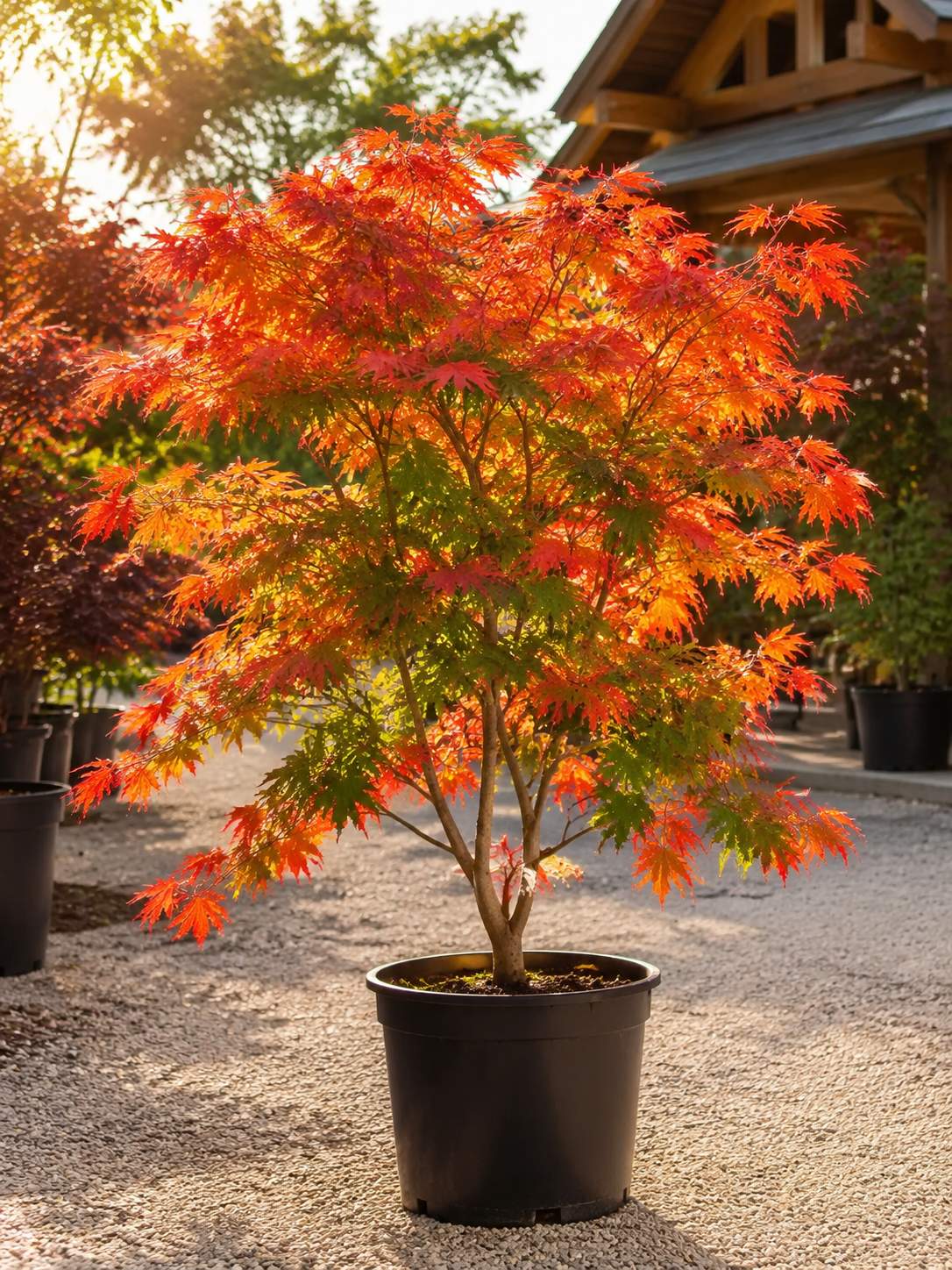
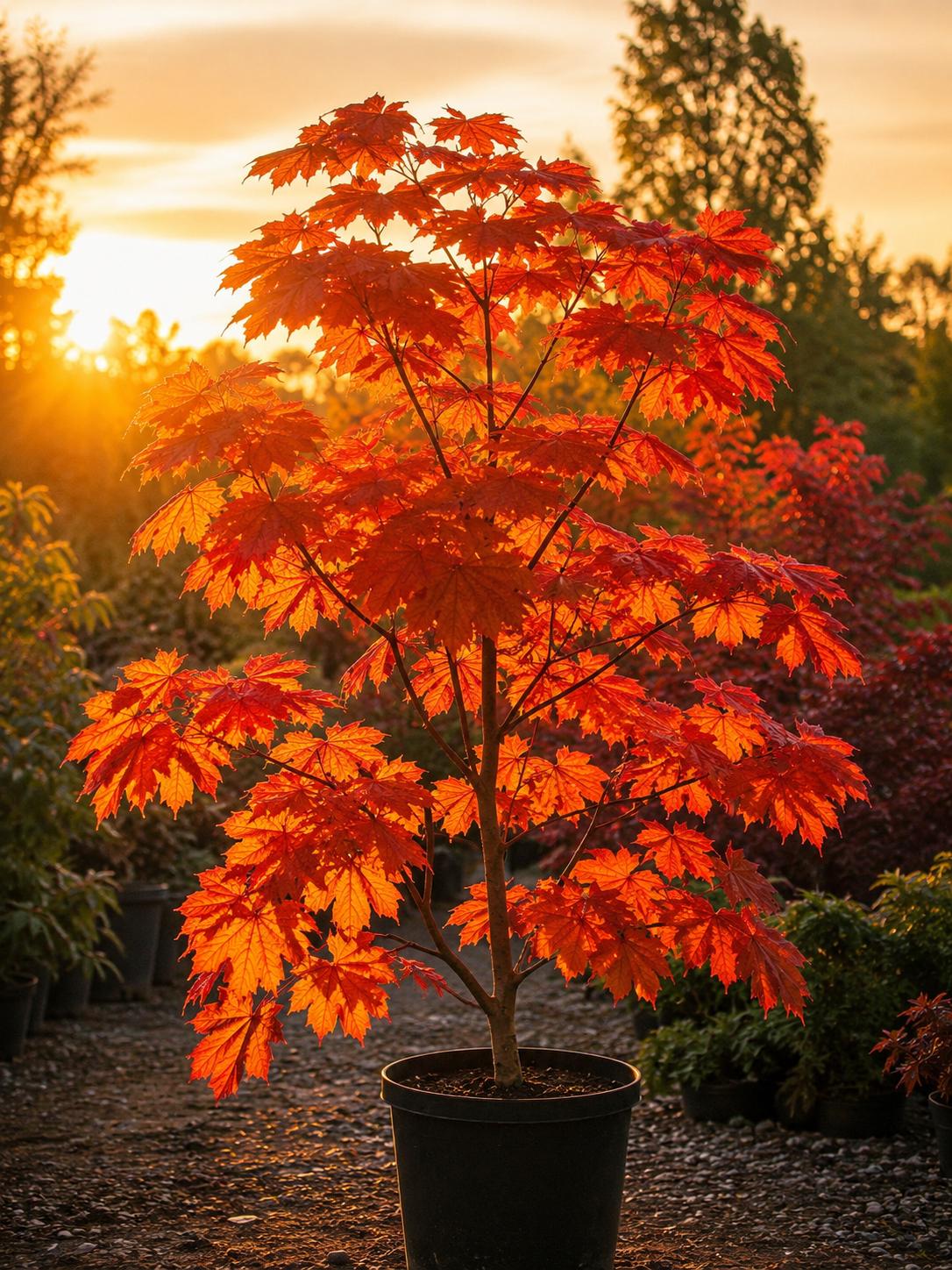
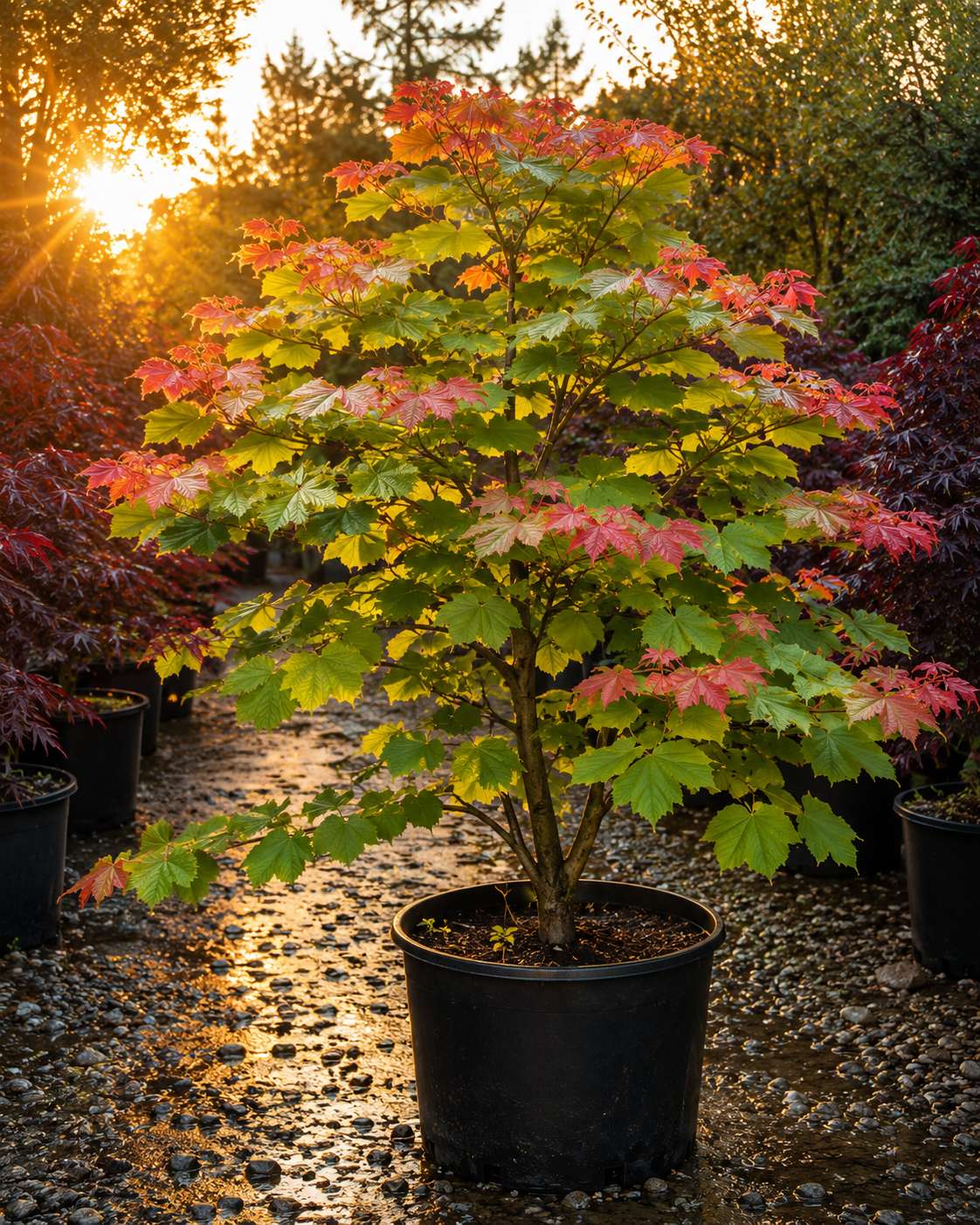
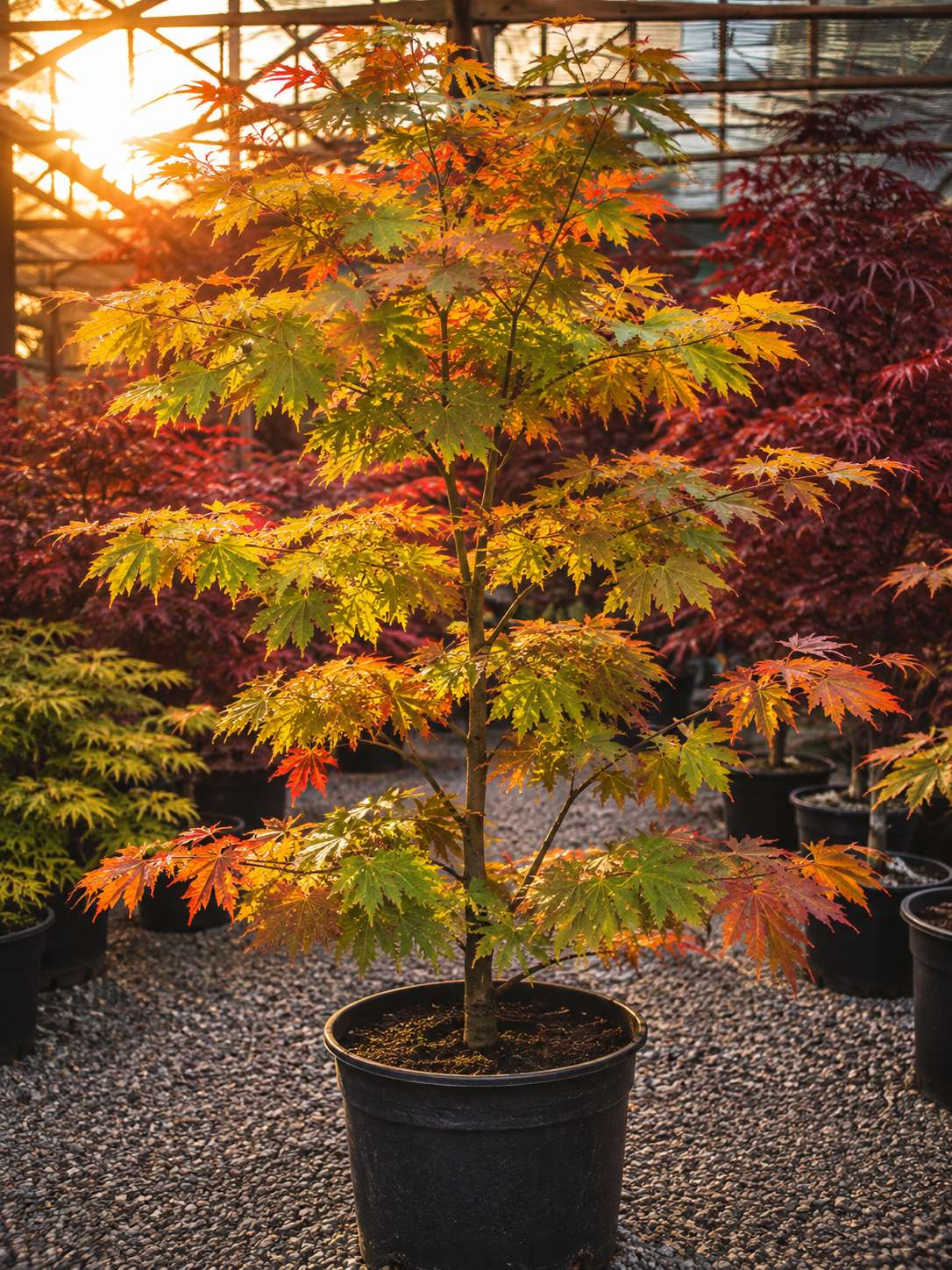
Mai Kujaku, meaning Dancing Peacock, is an exquisite weeping laceleaf cultivar with finely dissected, cascading green foliage. The spring leaves emerge in a light, cheerful green that creates a soft, feathery waterfall effect over the branches. During summer, the dense canopy matures into a rich, deep green before turning brilliant shades of gold and amber in fall. Its graceful weeping habit adds unmatched elegance to shady garden corners.
↕
10-Yr Height8.0
↔
10-Yr Width6.0
Seasonal Foliage Spectrum
Spring: Light Green
Summer: Deep Green
Fall: Gold and Amber
Sun Tolerance Ratings
Morning Sun8 / 10
Afternoon Sun4 / 10
☀️ Morning Sun Guidance:
Light, cheerful green spring foliage creates a soft feathery waterfall effect.
☀️ Afternoon Sun Guidance:
Weeping laceleaf benefits from afternoon shade protection.
Image highlights cultivar traits and is not exact photo of available stock. Image is property of Pungo Maples, unauthorized use prohibited.
Get to know your maple
Growth Habit & Size
Upright
Upright full-moon maple; do not infer weeping branches from the dancing-peacock name.
What do these growth habit terms mean?
More than one term can apply. Branch direction, crown shape and size describe different characteristics, and the outline can change as a tree matures.
Upright
Main stems and branches emphasize upward growth. An upright tree can still develop a broad canopy.
Spreading
Branches extend outward to form a broad canopy. The tree does not have to be wider than it is tall.
Weeping
Branches or branchlets arch or hang downward. The tree can still have an upright trunk.
Rounded
The crown has a rounded outline. This describes the overall shape rather than the direction of each branch.
Dwarf
A cultivar with a smaller natural stature than typical forms of its species. Dwarf describes size, not branch direction or a fixed height limit; it does not automatically mean slow growth.
For example: Bloodgood can grow upright while developing a broad, rounded canopy with spreading branches.
'Mai Kujaku' belongs under Acer japonicum, rather than Acer palmatum, and is widely treated as the Japanese name for 'Aconitifolium'. Van den Berk Nurseries identifies it as an old Japanese cultivar and explains that its Japanese name means dancing peacock. Malverleys records Japan as its origin and 1888 as its introduction year. Separately, Kew documents publication of the botanical name Acer japonicum var. aconitifolium by Meehan in 1888; publication of a name does not establish when the plant was originally selected. The reviewed sources do not identify its original selector, verified parentage, or original collection. Accordingly, the selection year remains undocumented. Its large, deeply divided leaves and vivid autumn colors explain its enduring popularity as the fernleaf fullmoon maple.