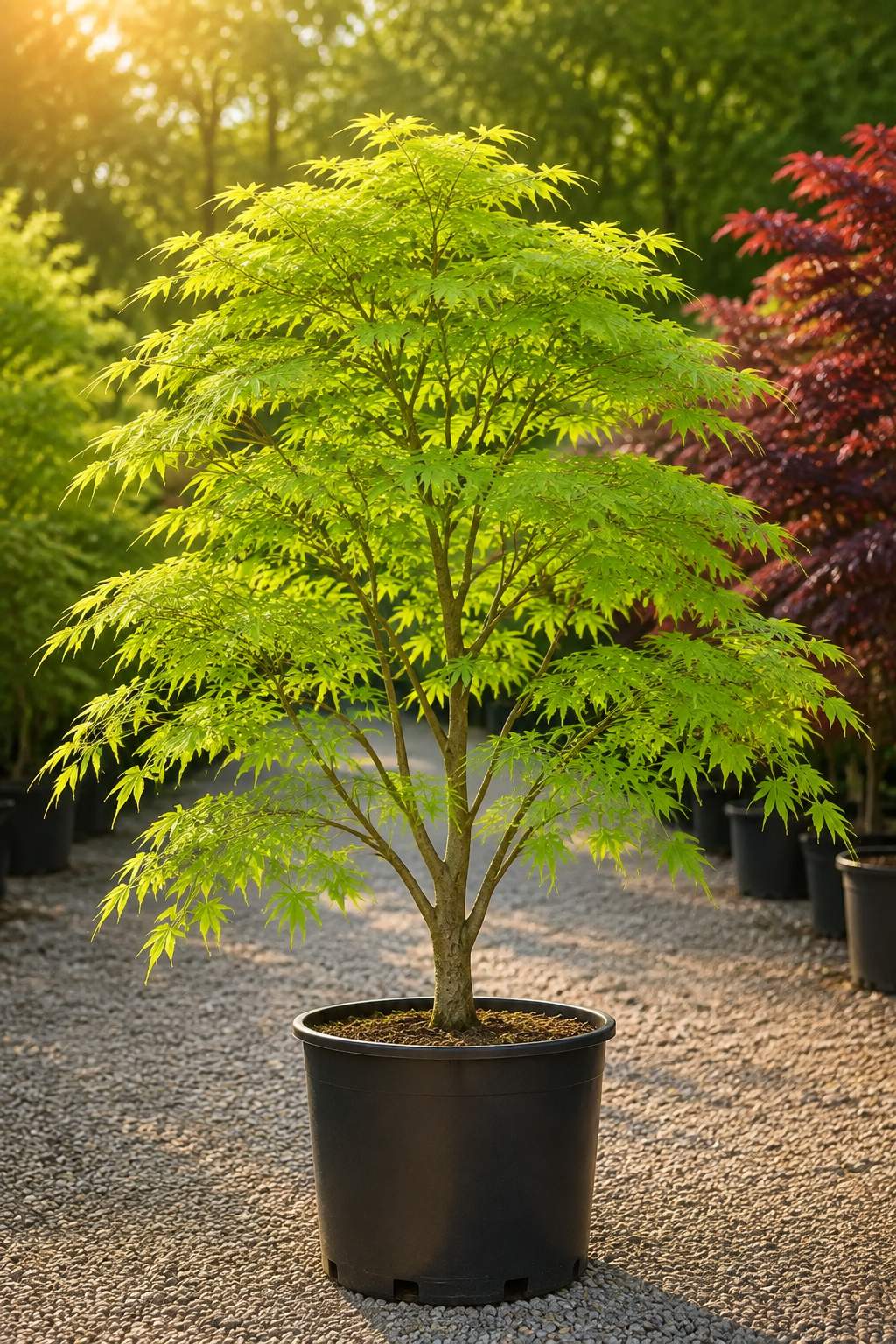
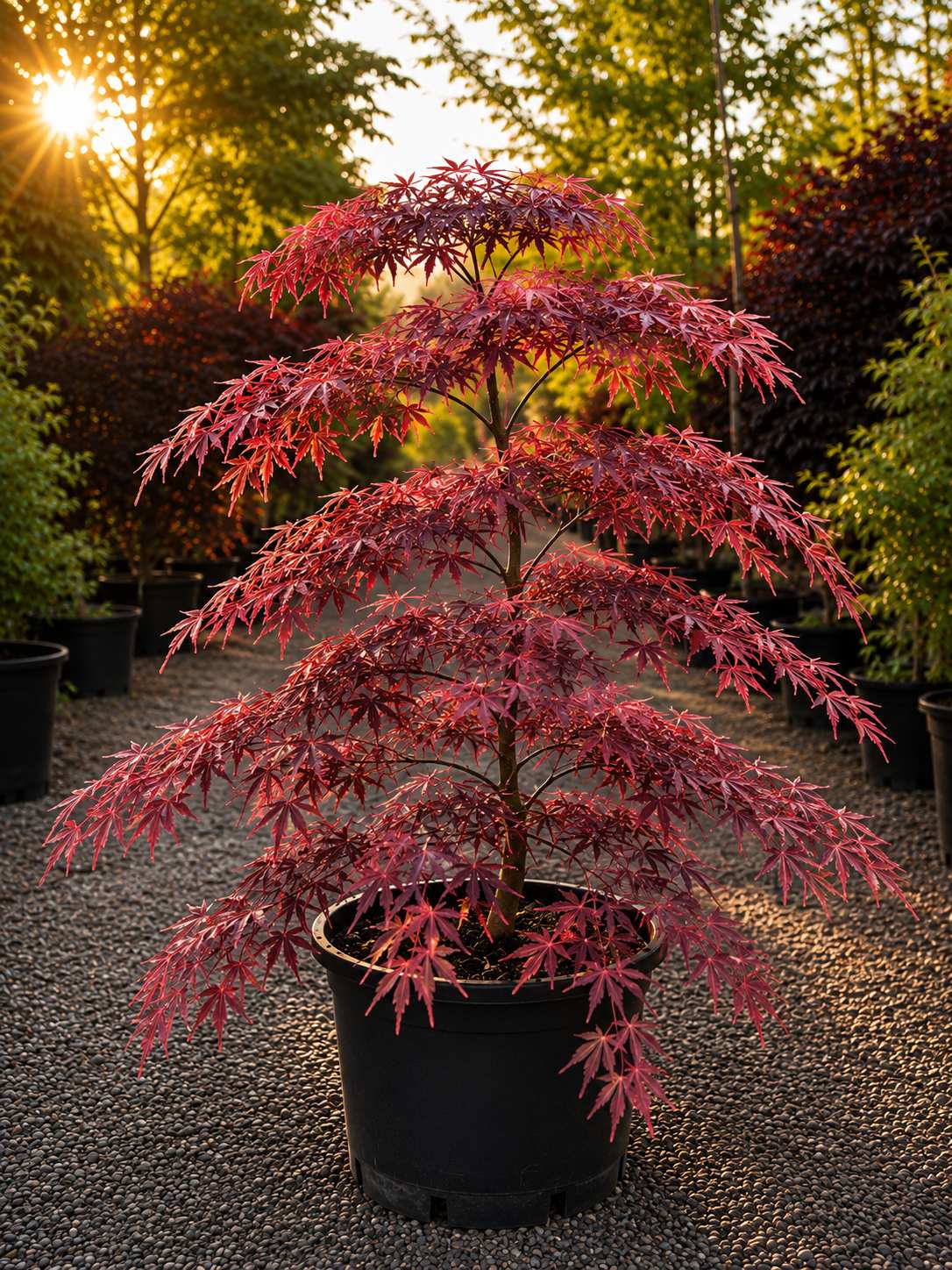
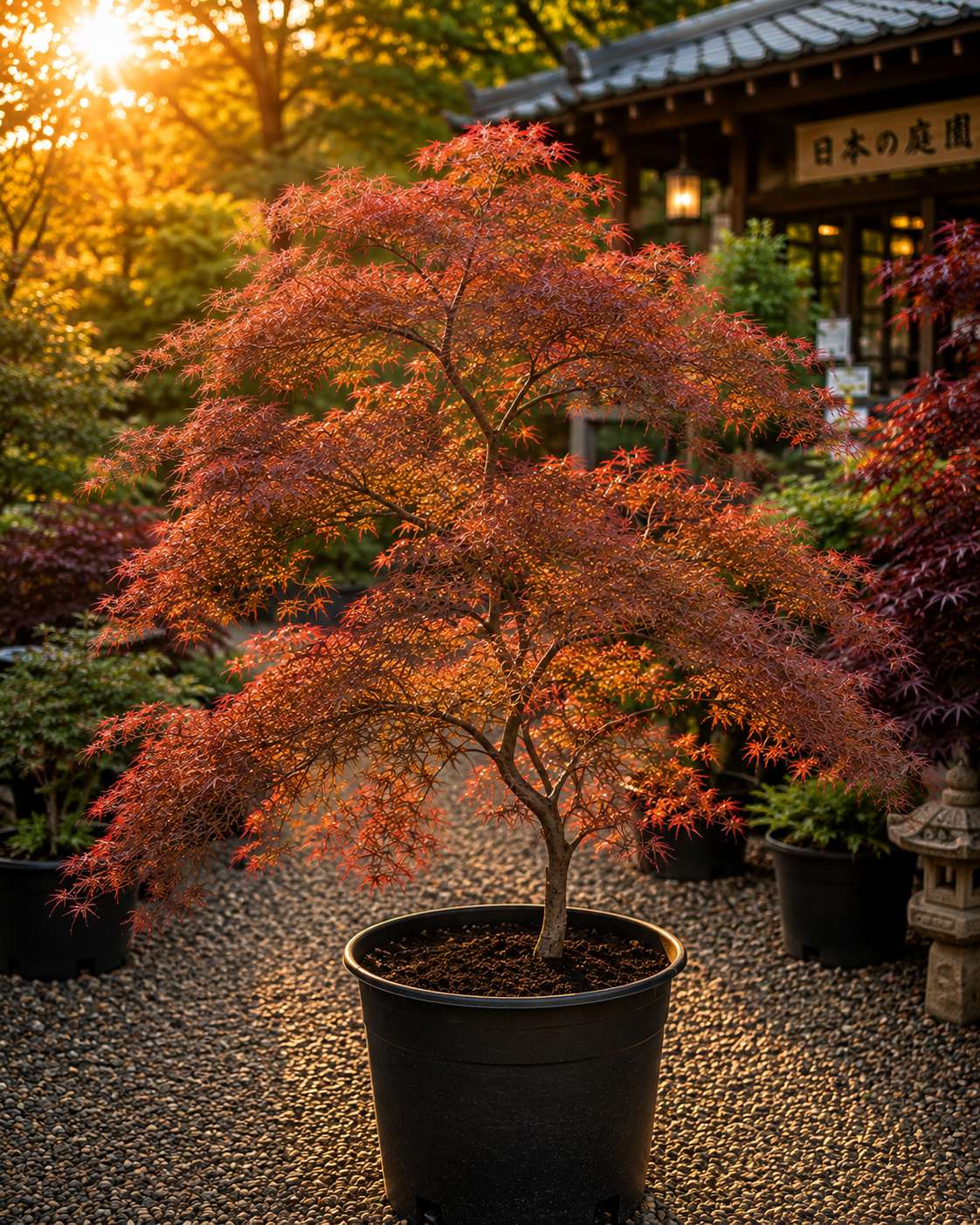
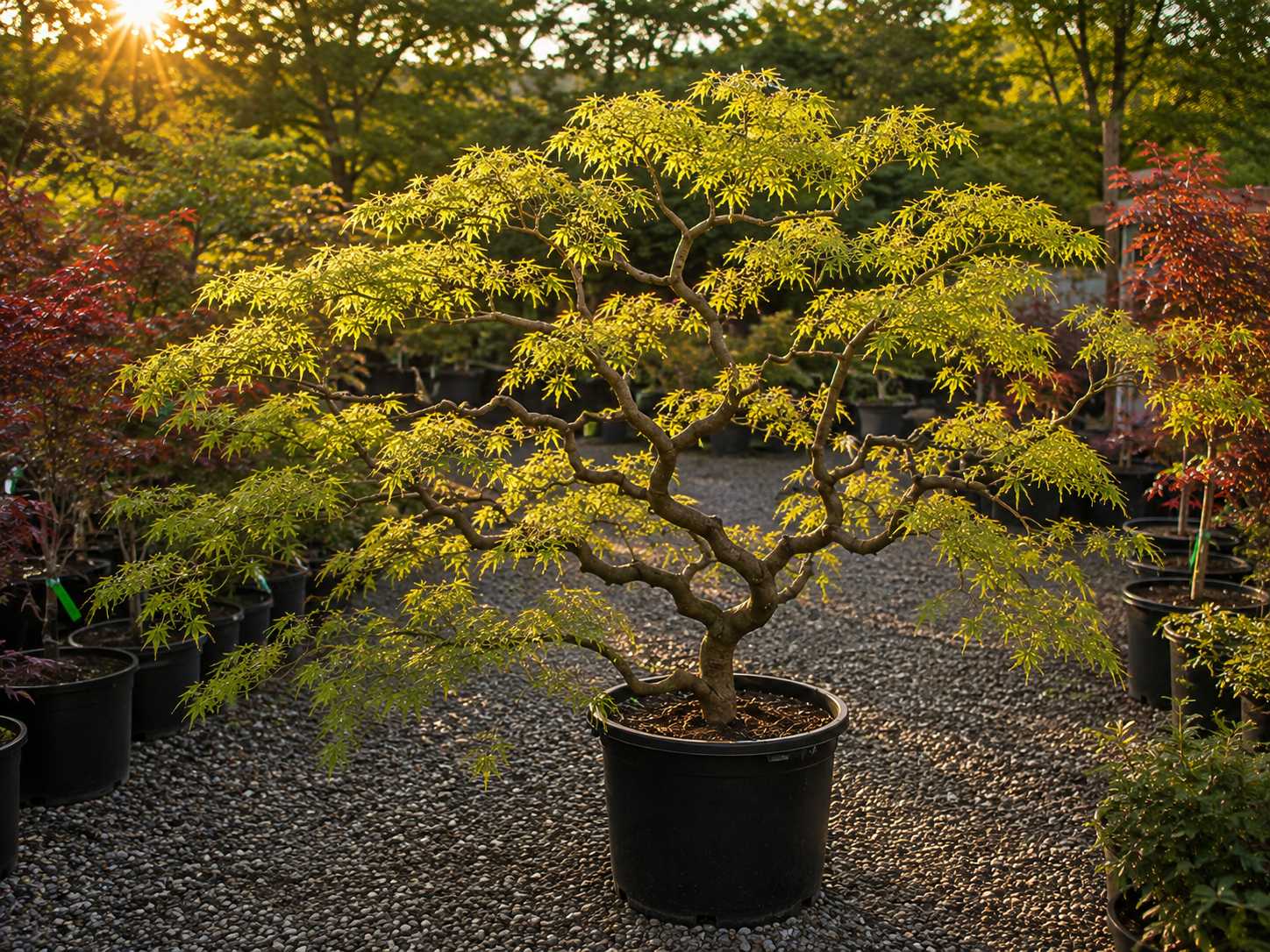
Omureyama is a magnificent weeping upright tree featuring long, arching branches that cascade downward like a green waterfall. The spring foliage emerges in a soft, bright green that creates a serene and peaceful atmosphere in the garden. During summer, the densely draped canopy matures into a deep, rich green. Autumn brings an absolute explosion of brilliant golden-yellow and bright crimson colors. Its weeping canopy makes it an unforgettable landscape feature.
↕
10-Yr Height12.0
↔
10-Yr Width10.0
Seasonal Foliage Spectrum
Spring: Soft Green
Summer: Rich Green
Fall: Gold and Crimson
Sun Tolerance Ratings
Morning Sun9 / 10
Afternoon Sun6 / 10
☀️ Morning Sun Guidance:
Soft, bright green arching branches cascade peacefully in the morning light.
☀️ Afternoon Sun Guidance:
Established weeping tree handles regular summer sun reasonably well.
Image highlights cultivar traits and is not exact photo of available stock. Image is property of Pungo Maples, unauthorized use prohibited.
Get to know your maple
Growth Habit & Size
Upright · Weeping
Upright framework with semi-pendulous branches. The Weeping selection describes the descending outer growth.
What do these growth habit terms mean?
More than one term can apply. Branch direction, crown shape and size describe different characteristics, and the outline can change as a tree matures.
Upright
Main stems and branches emphasize upward growth. An upright tree can still develop a broad canopy.
Spreading
Branches extend outward to form a broad canopy. The tree does not have to be wider than it is tall.
Weeping
Branches or branchlets arch or hang downward. The tree can still have an upright trunk.
Rounded
The crown has a rounded outline. This describes the overall shape rather than the direction of each branch.
Dwarf
A cultivar with a smaller natural stature than typical forms of its species. Dwarf describes size, not branch direction or a fixed height limit; it does not automatically mean slow growth.
For example: Bloodgood can grow upright while developing a broad, rounded canopy with spreading branches.
'Omureyama', also written 'Omure yama' or 'Omure-yama', has a documented historical connection with Japanese nurseryman Koichiro Wada. The American Public Gardens Association's Acer holdings report lists a Washington Park Arboretum accession supplied by Wada in Japan. That establishes a plant-source relationship, but does not alone prove that Wada selected the original cultivar or identify its first introduction date. A frequently repeated attribution to Wada in 1938 could not be confirmed directly in an original nursery or authoritative botanical account during this review. Selection date, parentage, and original collection therefore remain undocumented. Iseli Nursery describes its distinguishing features as deeply divided foliage, an elegant cascading habit, and dramatic red-and-gold autumn color; Junker's Nursery similarly emphasizes its curtainlike, pendulous branches.