Growth Habit & Size
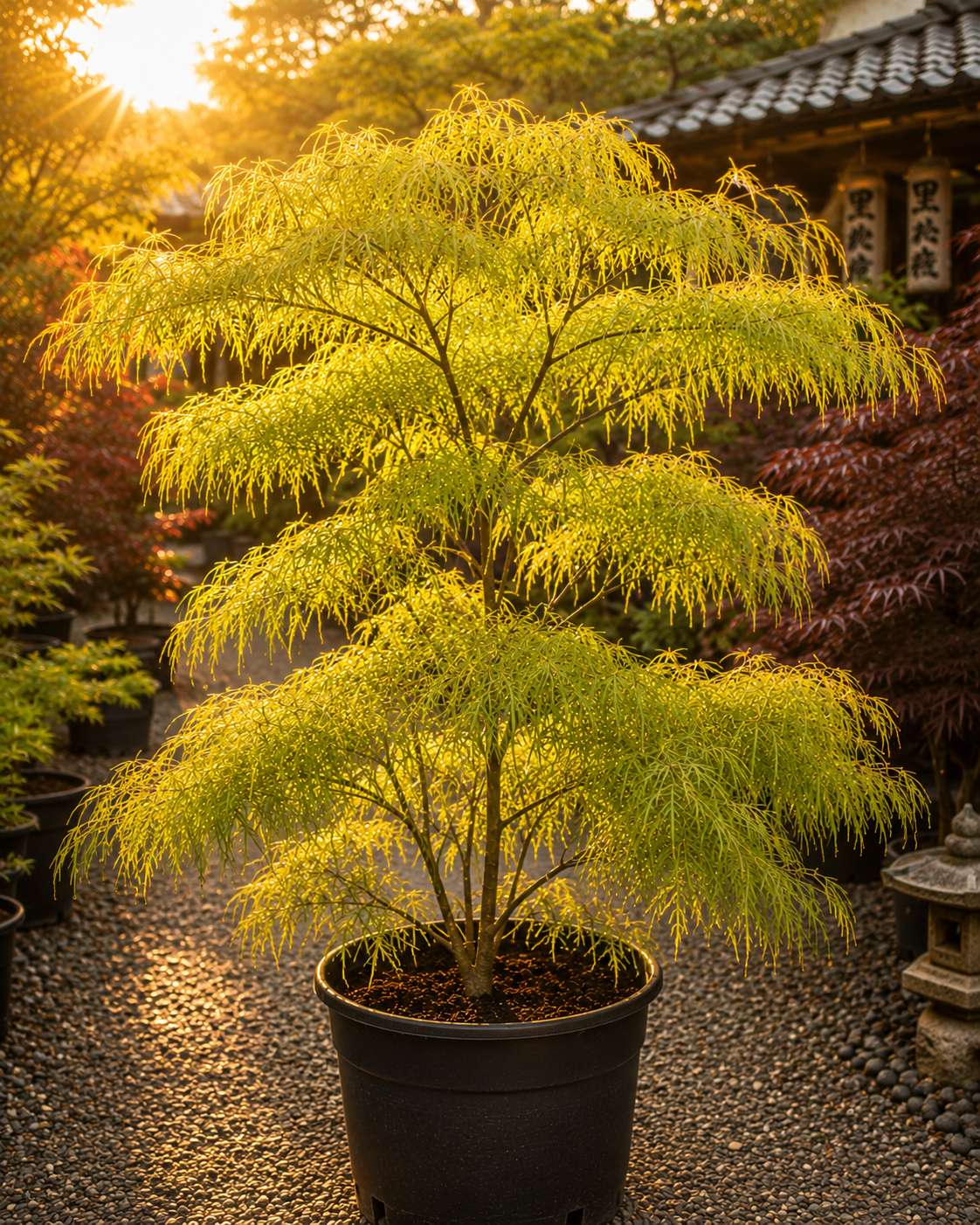
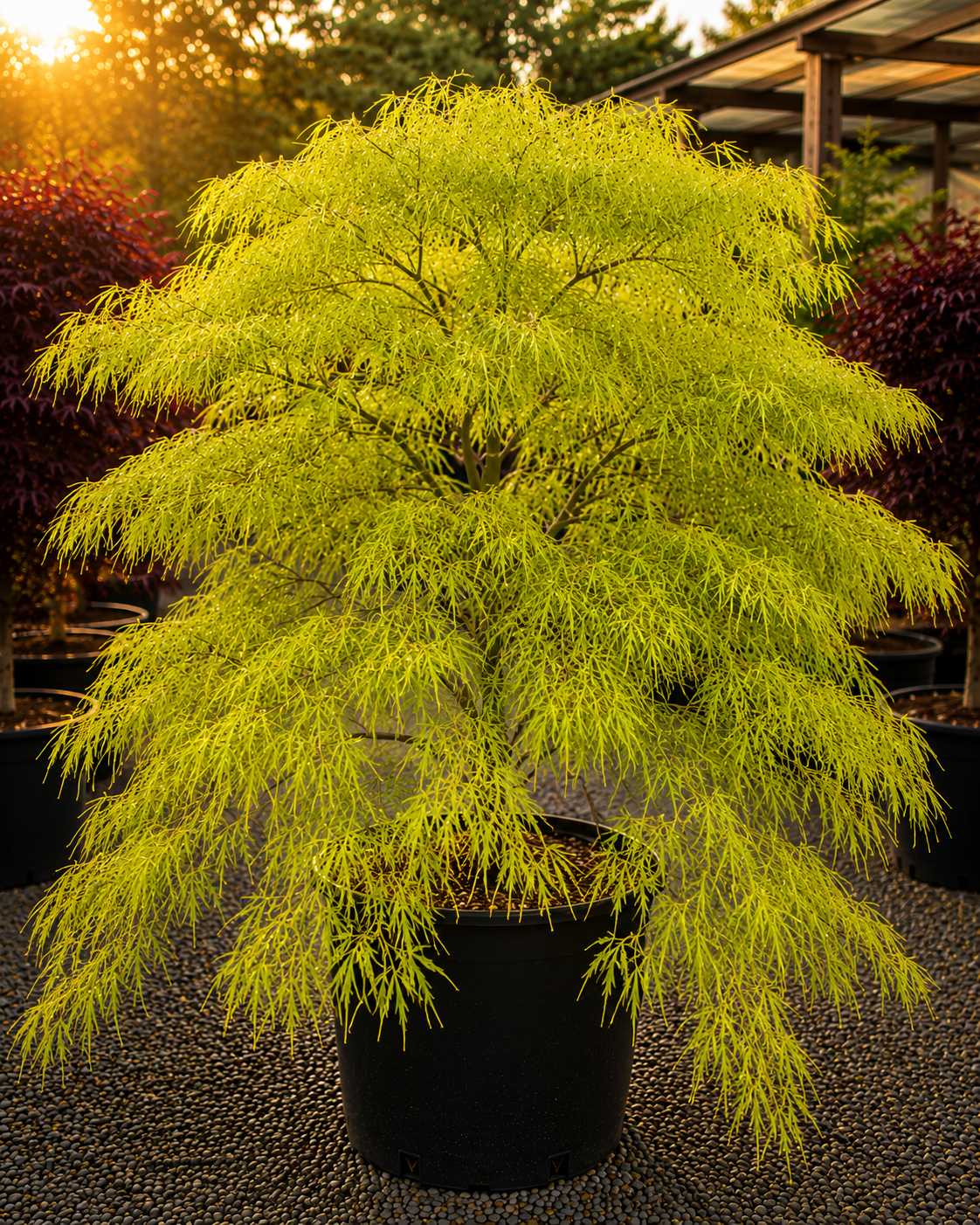
Upright
Upright tree with very fine strap-like foliage.

Virginia Beach Japanese Maple Nursery
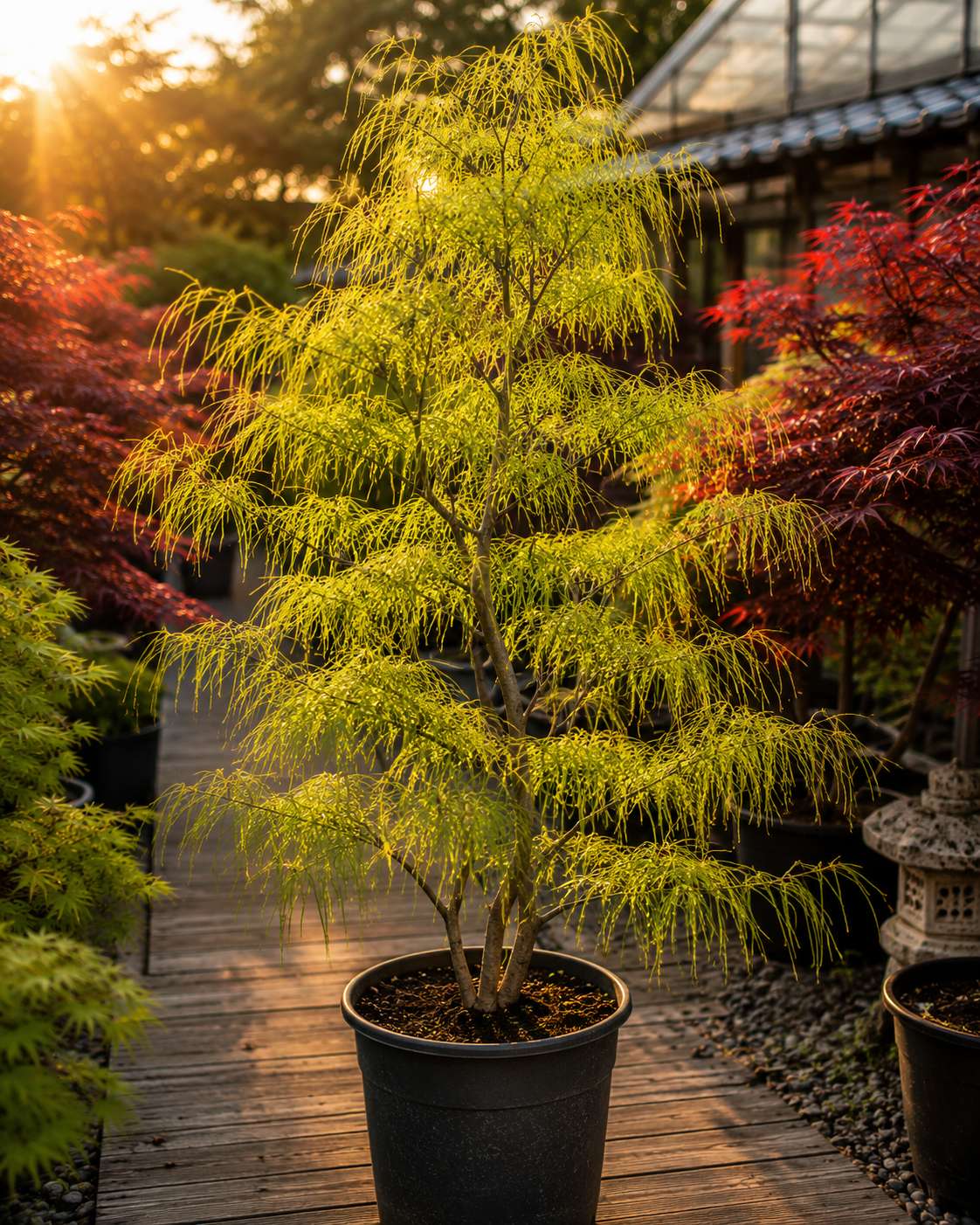
Upright
Upright tree with very fine strap-like foliage.
More than one term can apply. Branch direction, crown shape and size describe different characteristics, and the outline can change as a tree matures.
For example: Bloodgood can grow upright while developing a broad, rounded canopy with spreading branches.
Learn more: NC State plant forms · Bloodgood profile · RHS trees for smaller gardens
Roots & heritage
'Koto-No-Ito' is a Japanese maple associated with nurseryman Koichiro Wada. Seattle Japanese Garden explicitly credits Wada with naming and introducing it in Japan in 1938, and Érable du Val de Jargeau likewise attributes the 1938 introduction to his nursery. These accounts document introduction rather than the original selection event; they do not establish who first selected the plant or when. Maple Ridge Nursery also credits Wada with naming it for its narrow, straplike foliage. Commonly translated as 'harp strings,' the name evokes the slender leaf lobes. Seattle Japanese Garden describes an upright, vase-shaped tree whose fine spring foliage becomes green, followed by golden autumn color. No verified parentage, controlled cross, or original collection accession was located.
| Size | Price | Status |
|---|---|---|
| — | — | AVAILABLE |
| — | — | AVAILABLE |
| — | — | AVAILABLE |
| — | — | AVAILABLE |
| — | — | AVAILABLE |
| — | — | AVAILABLE |